


Turning Logistics Into Advantage
Apex transforms freight decisions into sustained financial and competitive advantage.
TALK to an Expert







Freight inefficiency is costly, and not by accident
It is a structural cost of how your freight network is planned.
Local decisions create
costly network waste
When you plan in silos-capacity fragments and costs compound.
Systems execute.
They do not optimize
ERPs and TMSs are built to manage transactions, not to optimize system-wide cost.
Empty miles are a system outcome
Without a unified network model, inefficiency compounds and you pay for it every day.

Apex is the intelligence layer
that freight networks are missing
To unlock structural cost and service advantage.
Unified network model
All freight data including demand, supply, and operational constraints is dynamically modeled in a single live network to eliminate structural blind spots.
Network-level optimization
Proactively optimizing decisions for the entire network eliminates costs associated with local decisions made without network visibility.
Intelligence that drives execution
Network-optimized decisions flow into ERP and TMS, turning insight into measurable savings.
Efficiency emerges when freight is planned as a network
Local planning creates inefficiency that costs you
Network-Level Planning Unlocks Efficiency at Scale
Local planning creates inefficiency that costs you
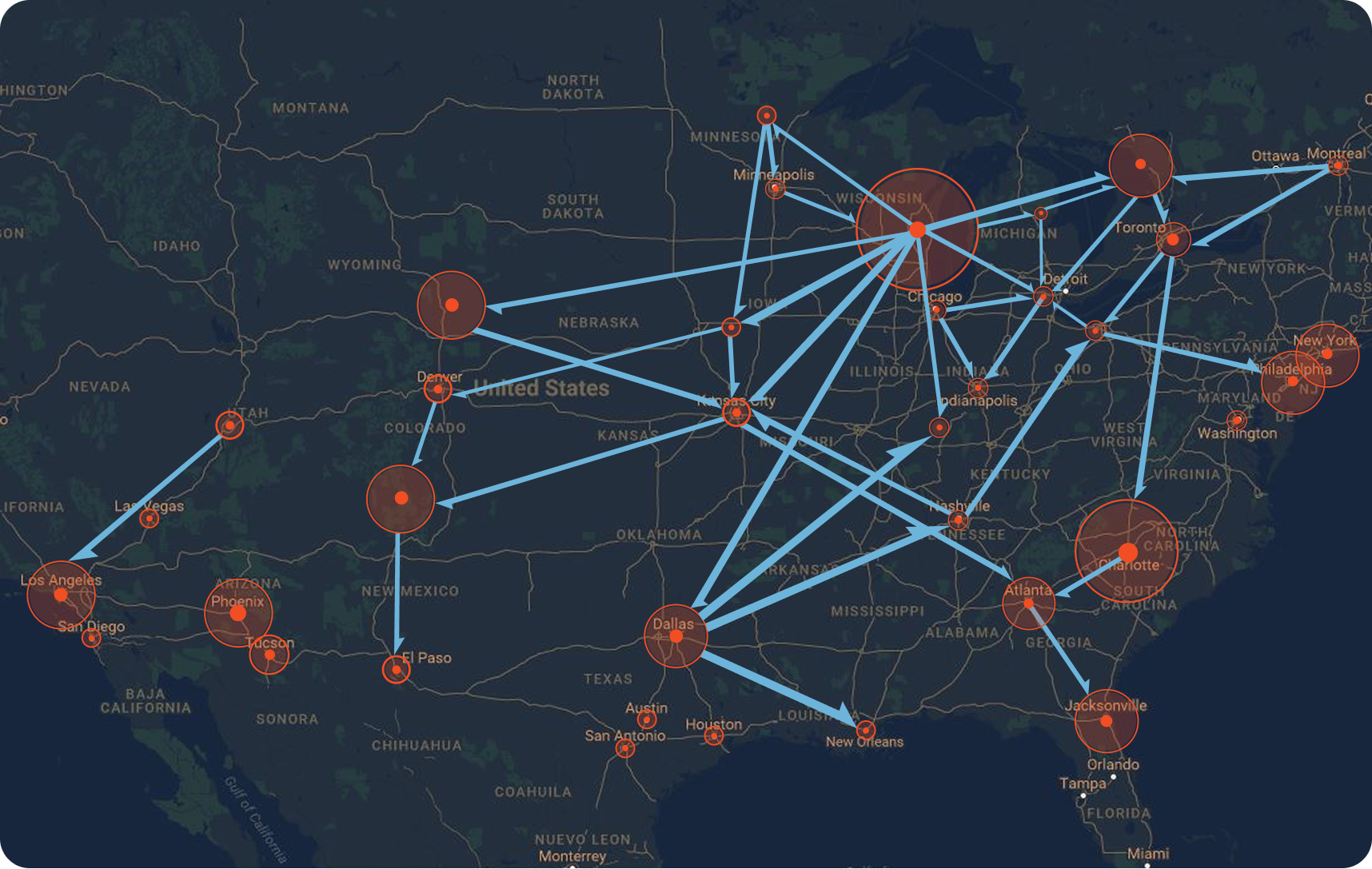
Network-Level Planning Unlocks Efficiency at Scale
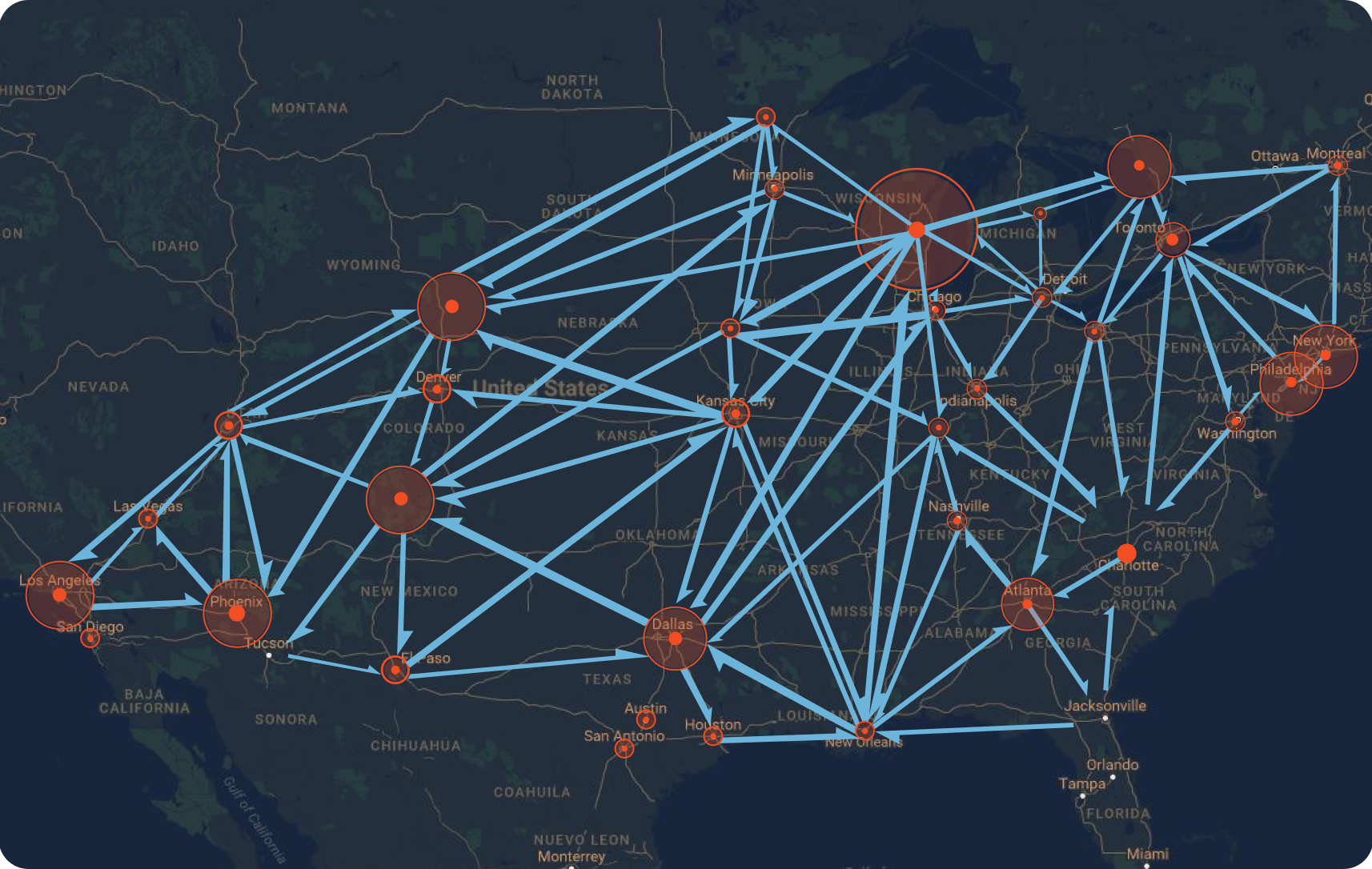
SemiCab Apex creates unique advantages for each player
Engineering market leadership, not just efficiency
Protect margins at scale
Reduce empty miles and inefficiency across your entire customer network, not per account.
Differentiate beyond price and capacity
Offer network-level outcomes competitors cannot replicate.
Scale intelligence, not headcount
Deliver better planning and utilization without linear ops growth.

Unlocking the most stubborn cost line in your P&L
Plan freight as one enterprise network
Across all BUs, plants, carriers, lanes, and time windows — not load by load.
Eliminate structural cost, not just negotiate rates
Remove network waste that procurement and local optimization cannot touch.
Turn transportation into a controllable P&L lever
Structural cost reduction without squeezing suppliers or adding capex.

Proven outcomes across large freight networks
Reduction in truckload transportation spend on top of TMS optimization
Reduction in spot market loads improved reliability
~ 15%
Reduced empty miles for your carriers by
Tested at scale.
Network intelligence in action
Network-wide orchestration in action at scale
A real example of network-level orchestration delivering measurable cost and efficiency gains.
From transactions to networks:
A new operating model for freight
A research-backed view on why freight needs a network-level operating model.
Request a demo
Leave your details and we’ll walk you through how Apex works for your network.
Frequently asked questions
SemiCab Apex addresses inefficiency caused by lane-by-lane planning by enabling coordinated, system-level planning across demand and capacity. This reduces structural cost, improves asset utilization, and lowers full truckload costs for both enterprise shippers and logistics service providers.
Enterprises typically see 3–5% reduction in full truckload transportation costs by planning freight at the network level. Savings come from fewer empty miles, better round-trip utilization, and coordinated planning across locations and time windows.
SemiCab Apex allows LSPs to optimize across their entire customer and carrier network instead of managing each account in isolation. This enables more competitive pricing, better margin protection, and positions the LSP as a network orchestration partner, closer to a 5PL model.
Yes, we do. Leave your details and our team will help scope a model that works best for your network and objectives.
No. SemiCab Apex works with your existing systems and processed. It integrates with your existing ERP and TMS setups to receive loads and share optimized plans, statuses, and invoicing data. No replacement or major system change is required.
SemiCab Apex is a SaaS platform with short implementation timelines. Most customers can get started within a couple of weeks, depending on data availability and network scope.
Organizations with multi-location, multi-customer, or multi-carrier freight networks see the highest impact.
As network complexity increases, the value of system-level planning compounds.
